Colorado mobile logo
Department of Psychiatry
School Of Medicine

Esketamine Clinic

Starting a new treatment like esketamine (Spravato) can be a bit scary and full of unknowns. We’d like to help prepare you for what to expect from esketamine treatment sessions at our clinic.
Welcome to the CU Medicine Esketamine Clinic

Esketamine (brand name Spravato) is used to treat people suffering from treatment-resistant depression (TRD), a form of depression that doesn't respond to most conventional antidepressant treatments. This page will help you understand what to expect from the treatment, potential side effects, and how to prepare yourself.

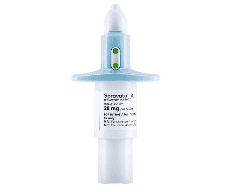
“Nasal spray device with a labeled white container and blue applicator.

Esketamine is a prescription-only drug that has been shown to be effective in treating depression that other forms of medication treatment haven’t helped. It is a nasal spray for depression—the first of its kind—and was FDA-approved for treatment-resistant depression in 2019. Esketamine is given in an outpatient clinic setting where you are closely monitored during your session by trained healthcare professionals.

If you’d like more information, you can read more on esketamine (Spravato) in this patient brochure.

Get a Ride:
Because treatment with esketamine can cause feelings of dissociation (an out-of-body experience) or sleepiness, you are not allowed to drive yourself home. Plan to have someone (a family member, friend, Uber or Lyft) take you to the clinic and pick you up after treatment. You will not be able to drive or operate machinery until the day after your session.
Avoid Food:
Avoid eating for 2 hours (or drinking 30 minutes) before your treatment, as some patients experience nausea. If you are particularly prone to nausea, please consider bringing either over-the-counter or prescription anti-nausea medication with you. You can discuss this further with your treating physician.
Bring Soothing Music:
Treatment with esketamine can often be enhanced with music or other calming experiences. We highly recommend bringing headphones and a soothing playlist (we don’t recommend high energy music with lyrics; instead focus on soft, calming music – consider downloading a yoga or meditation playlist in advance of your session). Books, knitting, or a journal can also be helpful items to bring.
Because treatment with esketamine can cause feelings of dissociation (an out-of-body experience) or sleepiness, you are not allowed to drive yourself home. Plan to have someone (a family member, friend, Uber or Lyft) take you to the clinic and pick you up after treatment. You will not be able to drive or operate machinery until the day after your session.

Treatment will take place in our clinical rooms that have been designed to be quiet, comfortable and private. After having your vital signs checked (heart rate, blood pressure), you will be given a nasal spray cartridge that you will self-administer. Each device holds 28 mg of esketamine, so most people will use either 2 cartridges (56 mg) or 3 cartridges (84 mg). The devices are designed to deliver a precise dose of medication with each push of the plunger and will deliver half the dose to each nostril. You will rest 5 minutes between each device to better absorb the medication.

Patients can experience a variety of feelings during an esketamine treatment. The most intense feelings/experiences happen soon after taking esketamine, and usually dissipate by 30-45 minutes. Patients may experience:

  • Feelings of disorientation
  • Feeling removed from your body/time/space
  • Experiencing a greater sense of connection
  • Feelings of anxiety or fear
  • Sleepiness
  • Feelings of peacefulness, spirituality, or relaxation
     

The idea of "leaning into the experience" means being open and accepting of the unique sensations and thoughts that may occur during and after your esketamine treatment. These experiences are temporary and part of the treatment process.

  • Set a positive mindset for your treatment and stay in a calm state of mind as you begin your session
  • Avoid alcohol for a day before/after treatment
  • Let go of specific goals and expectations and be open to treatment
  • Let go and don’t try to control or resist your response to treatment as this might increase stress, tension, and anxiety during your session
  • Accept your experience, rather than try to avoid it

Remember: You are in a supportive environment with trained healthcare professionals. Our clinical rooms were specially designed to be comfortable, quiet, and with adjustable lighting. The rooms don’t feel clinical but are more like a living room for your comfort. You will be closely monitored and released when medically ready. You aren’t alone

Treatment with esketamine will take place twice a week for the first 4-6 weeks and then, if the treatment is improving your symptoms, treatment typically changes to once a week after that. Further treatments and frequency will be determined by you and your doctor.
phone logo

Contact the Esketamine Program

CU Esketamine Program

Anschutz Health Sciences Building
1890 North Revere Court, Suite 5240
Aurora, CO 80045

Parking: We provide short term parking on the north side of the building. 

Phone:  303-724-6004

Email:  DOP.PsychNAT@cuanschutz.edu

Psychiatry

CU Anschutz

Anschutz Health Sciences
Building

1809 N Revere Ct
Suite 5240
Mail Stop F546
Aurora, CO 80045

Center Hours: 8:00AM - 5:00PM

Current Patients: 303-724-3300

New Patients: 303-724-4975

Fax: 303-724-4698

Email: depression.center@ucdenver.edu

© 2026 The Regents of the University of Colorado, a body corporate. All rights reserved. Web design by Never Settle
Accredited by the Higher Learning Commission. All trademarks are registered property of the University. Used by permission only.